Archives
- 2026-06
- 2026-05
- 2026-04
- 2026-03
- 2026-02
- 2026-01
- 2025-12
- 2025-11
- 2025-10
- 2025-03
- 2025-02
- 2025-01
- 2024-12
- 2024-11
- 2024-10
- 2024-09
- 2024-08
- 2024-07
- 2024-06
- 2024-05
- 2024-04
- 2024-03
- 2024-02
- 2024-01
- 2023-12
- 2023-11
- 2023-10
- 2023-09
- 2023-08
- 2023-07
- 2023-06
- 2023-05
- 2023-04
- 2023-03
- 2023-02
- 2023-01
- 2022-12
- 2022-11
- 2022-10
- 2022-09
- 2022-08
- 2022-07
- 2022-06
- 2022-05
- 2022-04
- 2022-03
- 2022-02
- 2022-01
- 2021-12
- 2021-11
- 2021-10
- 2021-09
- 2021-08
- 2021-07
- 2021-06
- 2021-05
- 2021-04
- 2021-03
- 2021-02
- 2021-01
- 2020-12
- 2020-11
- 2020-10
- 2020-09
- 2020-08
- 2020-07
- 2020-06
- 2020-05
- 2020-04
- 2020-03
- 2020-02
- 2020-01
- 2019-12
- 2019-11
- 2019-10
- 2019-09
- 2019-08
- 2019-07
- 2019-06
- 2019-05
- 2019-04
- 2018-07
-
This study has some limitations First the immunoblot analyse
2021-08-24

This study has some limitations. First, the immunoblot analyses performed in the present study did not test for whole retinal antigens. Therefore, we could not exclude the possibility that the clinical features of our cases were caused by the activity of other antiretinal antibodies, although the sa
-
Among the high value compounds derived
2021-08-24

Among the high value compounds derived from agricultural residues there are enzymes with industrial application. The extraction processes have been focused on the development of new strategies that guarantee high recovery rates with maximum activity (Nadar et al., 2017). The residues of these two fr
-
dpp-4 inhibitors br Materials and methods br
2021-08-24
Materials and methods Results Discussion Macrophages and dendritic cells respond to Toll-like receptor (TLR) ligands by upregulating CH25H expression [4], [5]. In the latter cell type TLR-dependent upregulation is mediated via a signalling pathway that involves NFκB and IFNβ secretion and c
-
We also identified Ubc as a functional E for
2021-08-24
We also identified Ubc13 as a functional E2 for LNX1 and determined the complex structure of LNX1–Ubc13~Ub, which depicts the first step of the ubiquitination process (Fig. 3a.). Comparing structural alignment of the RNF4 RING: Ubc13~Ub: Ube2V2 complex (PDB code 5AIU) [33] and the RNF4:Ubc13~Ub comp
-
The component E of PDHc PDHc E catalyzes
2021-08-24
The component E1 of PDHc (PDHc-E1) catalyzes the first step of multistep processes, using thiamine diphosphate (ThDP) and Mg2+ as cofactors.15, 16 Especially, this PDHc-E1 catalyzed process is a rate limiting step among multistep processes. Accordingly, the PDHc should be inactive by inhibiting the
-
In the present work we have investigated
2021-08-24
In the present work, we have investigated the reactivity of N-aryl-N′-hydroxyguanidines 1a–d (see Scheme 1 for structures) with the water-soluble Cu(II) complex 8. Using EPR and UV–Visible spectroscopy, we have shown that the studied N-aryl-N′-hydroxyguanidines 1a–d can bind and transfer electrons t
-
Cysteine protease inhibitors representing several
2021-08-23
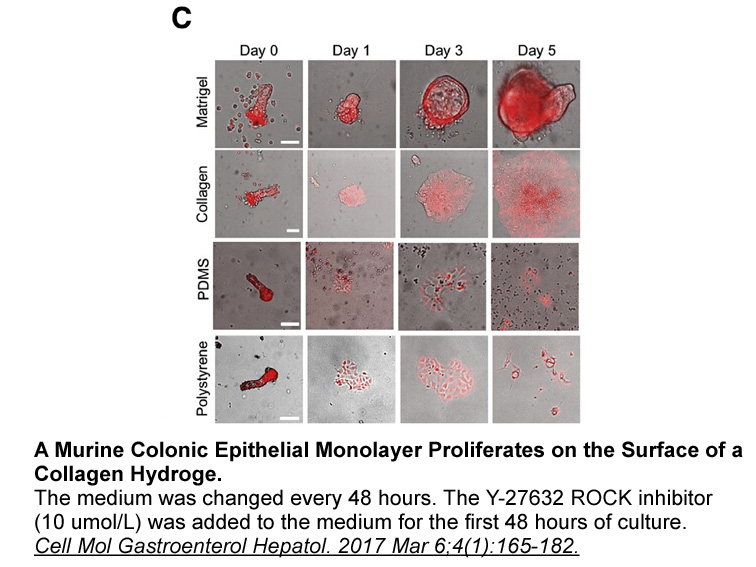
Cysteine protease inhibitors representing several chemical scaffold types are effective in halting parasite replication without toxicity to the host (Renslo and McKerrow, 2006). A vinyl sulfone cysteine protease inhibitor, K11777, is completing final Good Laboratory Practice (GLP) preclinical tests
-
These contrasting results observed with intra BNST
2021-08-23
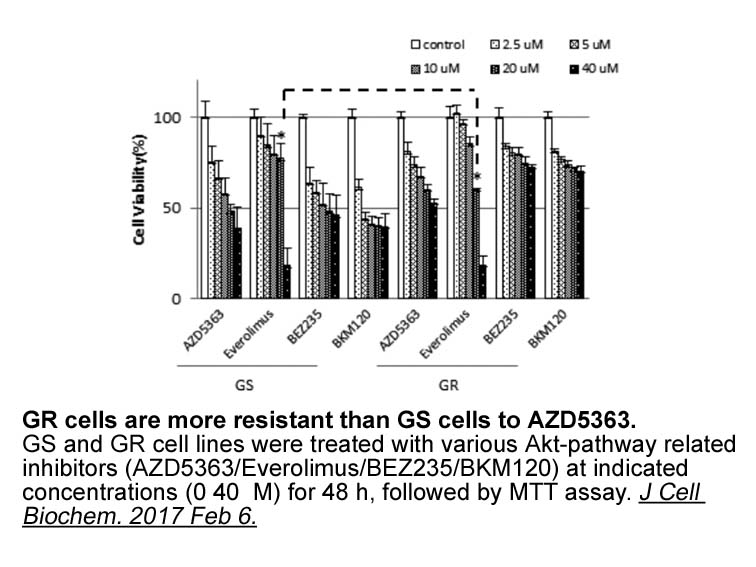
These contrasting results observed with intra-BNST combined injections of NOC-9 and CP 376395 on freezing (in the novel arena) versus anxiety-related behavior (in the EPM) suggest that CRF neurotransmission within this forebrain limbic site could be mainly involved in the modulation of more subtle a
-
The anticholinesterase activities of all subfractions derive
2021-08-23

The anticholinesterase activities of all subfractions derived from EtOAc extract were detected and summarized in . Fraction 5 and its resulting subfractions (5B, 5C, 5D, 5C3, 5C4, 5D3, and 5D4) were found to show attractive activities. Subsequently, ten compounds (–) were obtained from these active
-
Phos-tag In normal chow fed mice EP deficiency
2021-08-23
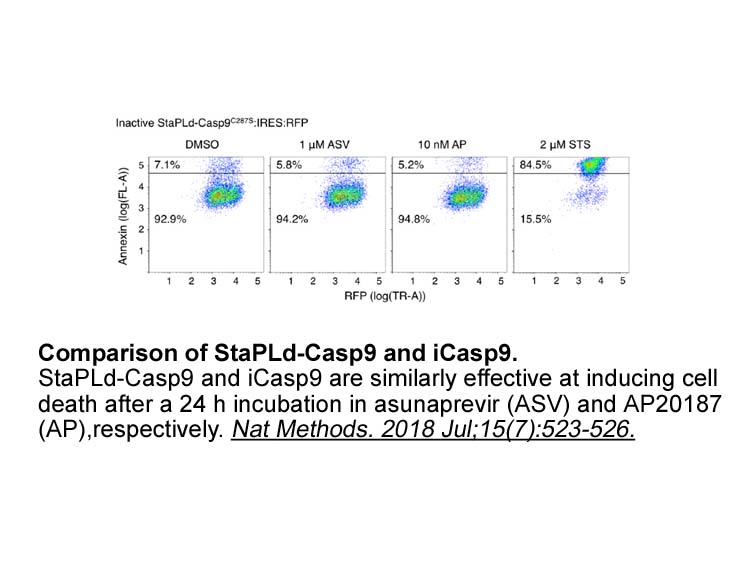
In normal chow fed mice, EP4 deficiency also decreased the expression of CYP8B1, the downstream target of CYP7A1. Similarly, knockdown of EP4 with small interfering RNA reduced the expression of CYP8B1 in HepG2 cells. Therefore, it was anticipated that there would be an increased expression of CYP8B
-
br O GlcNAcase Human OGA
2021-08-23

O-GlcNAcase Human OGA is a multidomain protein with an N-terminal domain similar to glycoside hydrolase family 84 (GH84) enzymes, a stalk domain, a C-terminal pseudo histone acetyltransferase (HAT) domain, and several low-complexity regions (Figure 1f) [43]. A splice variant that lacks the HAT do
-
As EBI is highly important
2021-08-23
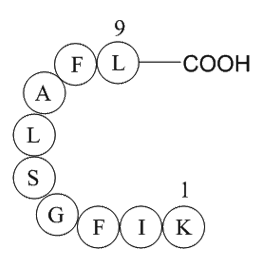
As EBI2 is highly important for generation of an efficient T cell-dependent humoral immune response [[5], [6], [7]] it may be that aberrant expression or other dysregulation of this receptor contributes in B cell pathologies. In line with this, EBI2 expression is down-regulated in diffuse large B-ce
-
The strand domain swap in the UbV XR dimer appears
2021-08-23

The β strand domain swap in the UbV.XR dimer appears to be a unique arrangement for a Ub-based dimer. In solution, free Ub has a KD of ∼5 mM for the monomer-dimer equilibrium, and the two subunits in the dimer adopt a range of relative orientations involving residues from Ub’s β sheet (Liu et al., 2
-
As small non coding RNAs microRNAs miRNAs can control
2021-08-23
As small non-coding RNAs, microRNAs (miRNAs) can control gene expression at the post-transcriptional level by binding to the 3′-untranslated regions (3′-UTR) of messenger RNAs (mRNA) [15], [16]. miRNAs have been anticipated to regulate virtually all cellular mechanisms [17] and to play an important
-
Previous studies showed that many
2021-08-20
Previous studies showed that many steroidogenic enzymes act when the enzyme binds to the cofactor first [30]. In the present study, we showed that HPTE inhibited both AKR1C14 and RDH2 in a mixed mode when cofactor was used. This indicates that HPTE interferes with cofactor-binding residues although
15679 records 583/1046 page Previous Next First page 上5页 581582583584585 下5页 Last page